Council of Europe Urges AI Literacy Across 46 States
The Council of Europe’s Committee of Ministers adopted a recommendation on AI literacy on 4 September 2026 in Munich, urging the organization’s 46 member states to teach citizens how
PromptCrates Editorial
Staff Writer

The Council of Europe’s Committee of Ministers adopted a recommendation on AI literacy on 4 September 2026 in Munich, urging the organization’s 46 member states to teach citizens how AI reshapes rights, democracy, and daily life—not only how chatbots work. The text implements Article 20 of the Framework Convention on Artificial Intelligence, Human Rights, Democracy and the Rule of Law, the first legally binding international treaty in this field.
What the Munich recommendation asks of states
Reporting from Eunews describes a soft-law instrument aimed at students, teachers, parents, workers, public officials, and citizens of all ages. Member governments are asked to weave AI literacy through education systems and to fund continuous professional development for public-sector staff who already deploy automated tools. The Council frames AI as a “sociotechnical phenomenon”: the models matter, but so do the people, institutions, policies, and social practices that shape design and use.
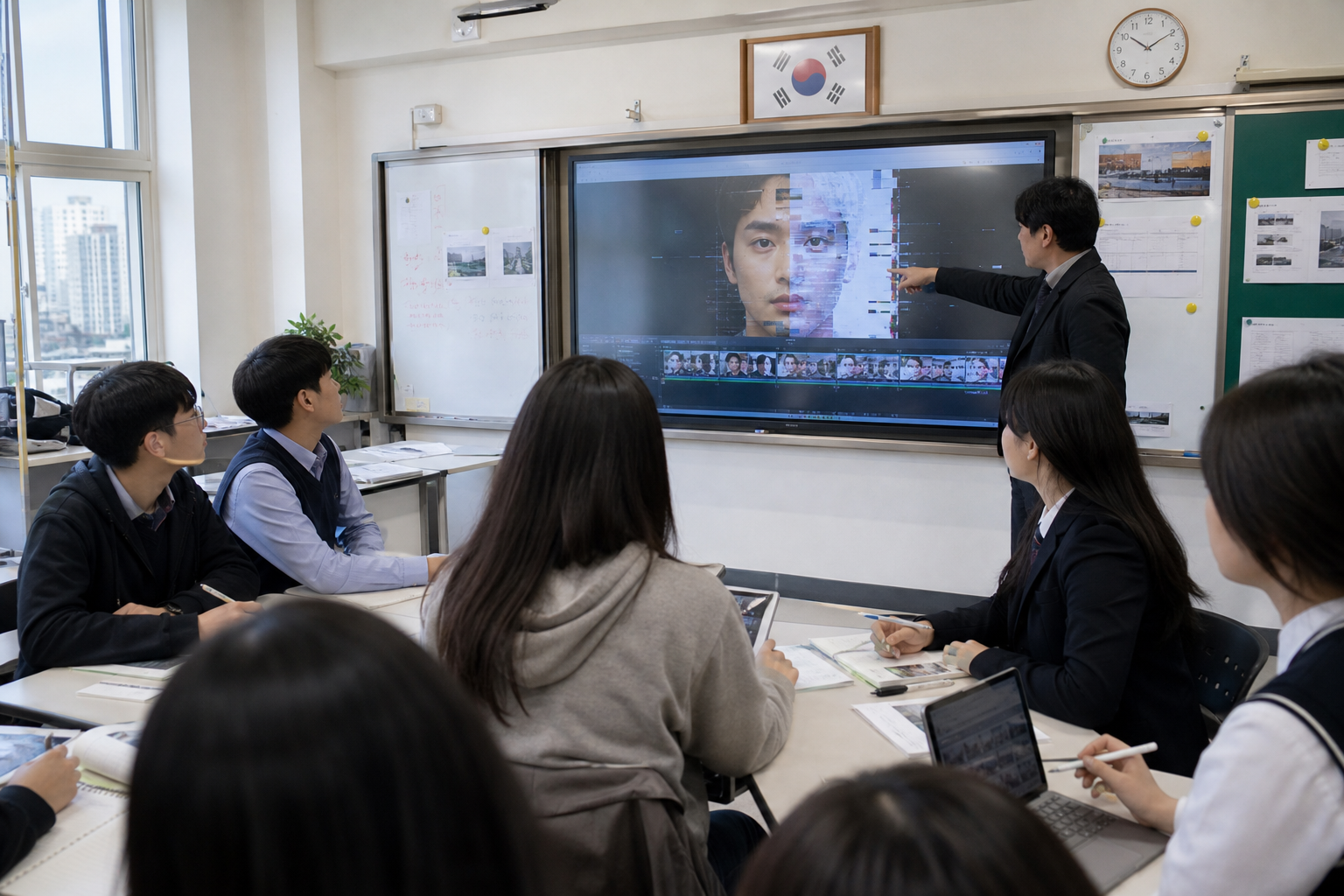
That framing is deliberate. Many national curricula still equate AI literacy with prompt tricks or basic machine-learning vocabulary. The Committee of Ministers text insists literacy means recognizing when systems threaten human rights, democracy, and the rule of law. In Council language, education remains a pillar of democracy, so classrooms become the front line for civic resilience rather than a side quest for computer science departments alone.
The recommendation supplies a framework of 22 guiding principles grouped under four themes: fundamental understanding of AI; human rights and dignity; democracy and the rule of law; and social action with critical thinking. Those principles rest on a three-dimensional model—human, technological, and practical—with special weight on the human dimension. Dignity, social agency, privacy, autonomy, equity, non-discrimination, wellbeing, social justice, sustainable development, and environmental impact are named as literacy content, not optional ethics footnotes.
How the three dimensions reshape curricula
The technological dimension covers how systems learn, fail, and encode data. The practical dimension covers everyday use: when to trust an output, how to verify sources, and how workplaces should supervise agents. The human dimension is the Council’s differentiator against purely skills-based frameworks. Teachers are expected to discuss surveillance risks, discriminatory scoring, and democratic participation alongside spreadsheet automation. That mix aligns with earlier Council policy briefs that argued technical-only literacy under-emphasizes rights.
Seven operational recommendations translate principles into bureaucracy. They span governance, curricula, teaching and assessment, professional development, higher education and research, and public awareness campaigns. Ministries can adopt local versions rather than a single Brussels-style syllabus, which matters for a 46-state organization that includes both EU members and non-EU democracies. Flexibility is the point: Strasbourg wants shared civic outcomes without pretending every school system can copy the same lesson plan next Monday.
Universities and teacher colleges sit in the crosshairs. If AI literacy is civic, then faculties of education must train instructors who can host contested classroom debates without reducing the topic to tool demos. Public administrations likewise need continuous learning tracks so permit clerks and welfare caseworkers understand how algorithmic decision tools can err. The recommendation’s audience list—parents and workers included—signals that literacy is lifelong, not a single middle-school module.
Why this matters beyond Europe’s classrooms
Soft law is not a court judgment, yet Council of Europe recommendations often seed national statutes and inspectorate guidance. Article 20 of the Framework Convention already commits parties to promote digital literacy; the Munich text supplies a ready checklist for ministries that need to show treaty-aligned action. For companies selling generative tools into European schools, expect procurement questionnaires that ask about bias documentation, teacher training materials, and student-data retention—not only feature lists.
The education focus also contrasts with this morning’s University of Florida–NVIDIA curriculum story on industry-backed coursework. Corporate partnerships can accelerate technical skills; the Council is warning that skills without a human-rights spine are incomplete citizenship training. Parents watching deepfake harassment or automated grading disputes will recognize why critical thinking and social action appear as full themes rather than afterthoughts.
Implementation will be uneven. Wealthier ministries can fund teacher release time; others may issue glossy PDFs and stop there. Civil-society groups should track whether the 22 principles appear in inspected curricula, whether public officials receive paid training hours, and whether assessment rubrics reward rights analysis instead of only prompt engineering. If those metrics move, the Munich recommendation will have done more than decorate a press release—it will have shifted what “AI-ready schools” means across 46 states.
School leaders reading the recommendation should inventory where AI already appears without policy: homework chatbots, plagiarism detectors, adaptive quizzes, and administrative chatbots that answer parent emails. Each of those touchpoints is a curriculum opportunity under the practical and human dimensions. A simple audit—who uses which tool, on whose data, with what appeal process—gives ministries a baseline before writing glossy strategy PDFs.
Journalist and librarian associations can help localize the 22 principles. Libraries already teach media literacy; extending that franchise to synthetic media, recommendation ranking, and automated decision notices keeps AI literacy from becoming an exclusive STEM elective. The Council’s insistence on lifelong learning also invites adult-education providers and unions to negotiate paid training hours rather than unpaid evening webinars.
Outside Europe, ministries watching Strasbourg often borrow language even without formal membership obligations. Expect OECD-aligned education strategies and bilateral aid programs to echo the three-dimension model. Vendors that can map product documentation to those dimensions—human rights impacts, technological limits, practical classroom use—will clear RFPs faster than those selling only accuracy benchmarks.