University of Florida Scales AI Across Every College
The University of Florida has scaled artificial intelligence across every college since 2022 with Nvidia and alumnus Chris Malachowsky’s backing, now offering more than 200 AI courses,
PromptCrates Editorial
Staff Writer
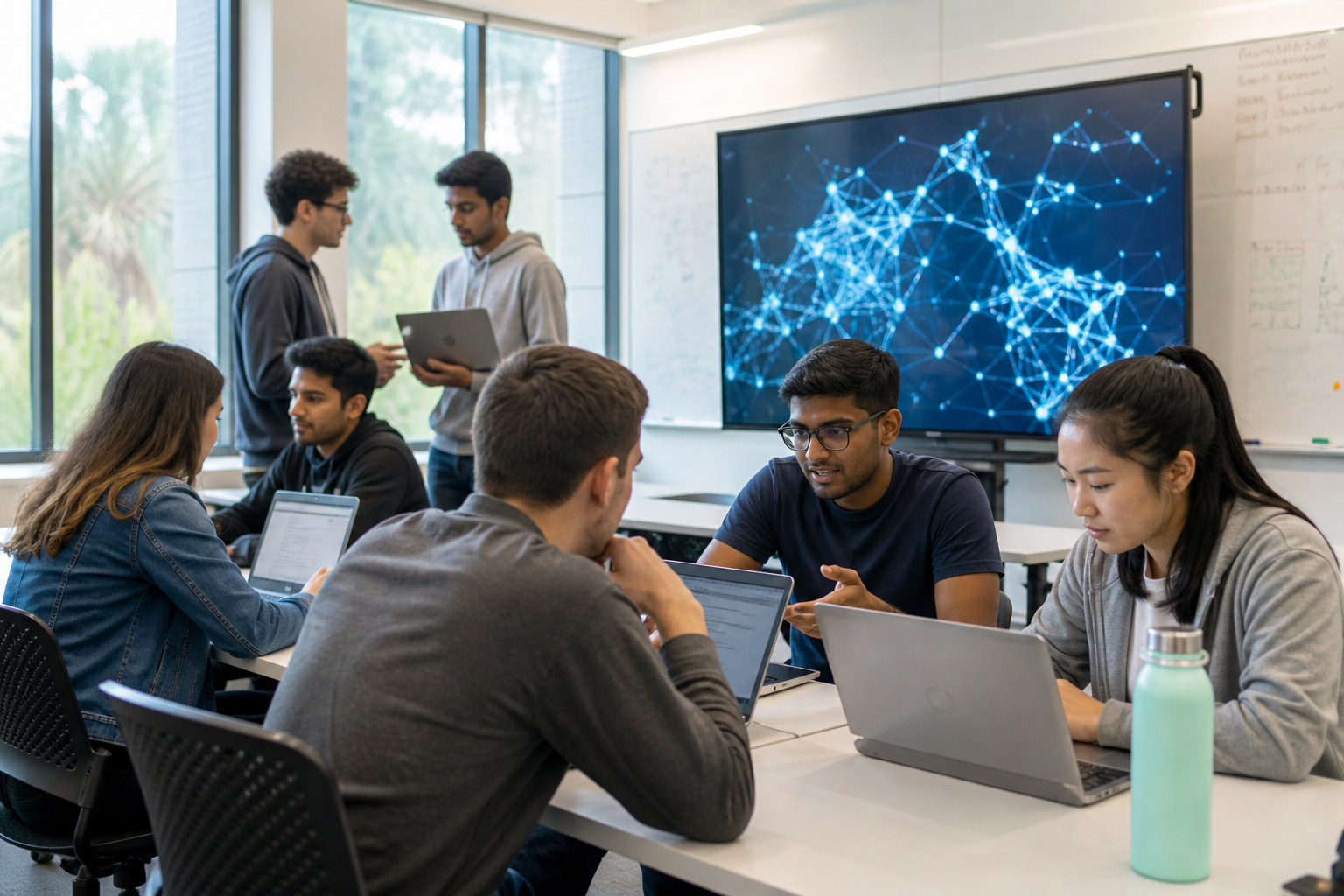
The University of Florida has scaled artificial intelligence across every college since 2022 with Nvidia and alumnus Chris Malachowsky’s backing, now offering more than 200 AI courses, about 100 new faculty hires, and roughly $95 million in program investment including the HiPerGator supercomputer. CNN’s 2 September 2026 report profiles student Ethan Pecora running 15 AI agents for coursework and a wellness app, plus an international summit that drew nearly 500 attendees from 10 countries.
How UF put AI in every college
Provost Joseph Glover rejects the idea that AI literacy belongs only in computer science or engineering. The Gainesville campus instead pushes discipline-specific certificates — hospitality, public health, and more — so graduates can apply models without an engineer permanently seated beside them. Faculty hired into that push, such as geological sciences professor Emma MacKie, use AI to fuse physical models and massive datasets, including Antarctic ice-sheet topography work with students.
The money trail starts with Malachowsky, Nvidia cofounder and 1980 UF graduate, who sits on the university foundation board. After urging trustees toward an AI strategy in 2018, he famously asked Glover what the school would do with an AI supercomputer. Glover’s near-instant answer — teach AI across the curriculum — unlocked HiPerGator plus a hiring wave across 16 colleges. Nvidia, Malachowsky, the university, and the state together seeded about $95 million. That early bet arrived before ChatGPT’s consumer breakout, giving UF a curriculum head start many peers are still chasing.
Course quality remains uneven. Pecora praised agent workflows for calendars and product work, yet described a 2024 AI-in-business class as more of a Python crash course than an applied AI lab. MacKie recalled an “oh crap” moment when a lab activity she prepared broke before class because the underlying tools had shifted. Those frictions are the cost of teaching against a moving stack — and a reminder that curriculum teams need continuous refresh budgets, not one-time syllabus PDFs.
Student agents, jobs, and cheating tensions
Pecora’s swarm of 15 specialized agents sounds like a startup stack transplanted into undergrad life. He resists calling it a “second brain” because the phrase feels dystopian, but the setup shows how aggressively some students operationalize campus AI access. Elsewhere, faculty adapt assessment: MacKie lets students use AI freely on term papers while grading originality and maturity of ideas, joking that earning a C got easier while earning an A got harder.
Labor-market data reinforces the urgency. The National Association of Colleges and Employers reported in spring 2026 that more than one third of entry-level job listings required AI skills — nearly a threefold jump year over year. UF leaders argue that ignoring those signals would strand graduates. Critics counter that mandatory AI fluency could normalize shallow automation and weaken independent thinking. An Inside Higher Education survey of more than 1,000 students across 203 institutions found 40% worried AI reduces independent thought, while only 7% said they were fully enthusiastic.
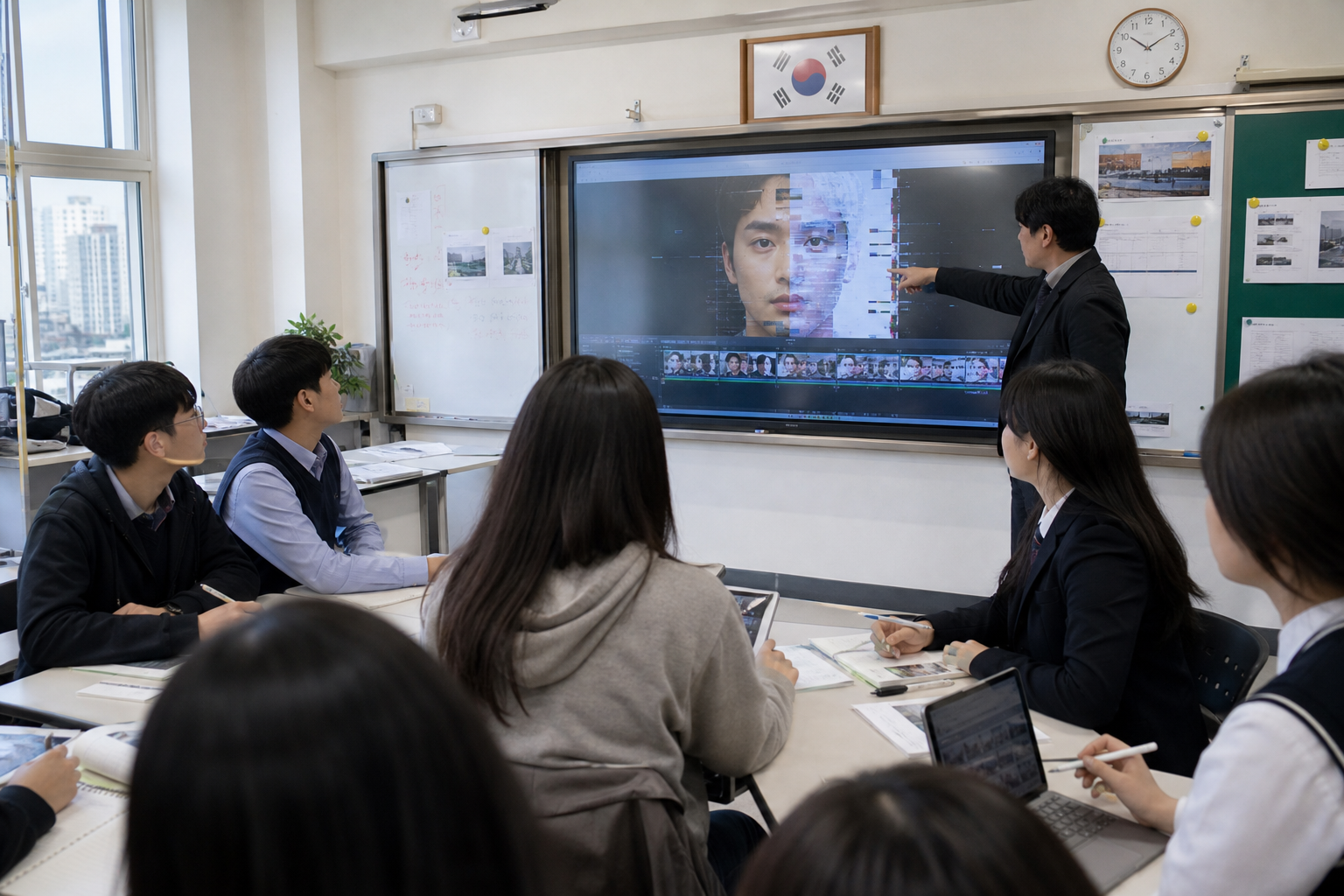
Academic integrity numbers complicate the optimism. Campus reporting cited by The Independent Florida Alligator showed AI-related misconduct cases rising from zero in fall 2021 to 66 by April 2025. One professor allegedly abandoned homework entirely in favor of in-class exams. UF says it promotes responsible use and requires students to follow instructor rules. That policy line is familiar across higher education, yet enforcement still lags the tooling students carry in their browsers — a tension also visible in Korea’s BCMCC deepfake media ethics efforts aimed at younger learners.
Exporting the blueprint through a summit
UF’s international summit has become the soft-power channel for its model. Nearly 500 people from 10 countries and 40 U.S. states attended the 2026 conference to hear panels and pick apart the Gainesville playbook. Kelvin Bentley of the National Association of Higher Education Systems notes many institutions are still stuck on faculty AI literacy, while UF already runs hundreds of courses. Carnegie Mellon and Milwaukee School of Engineering pioneered earlier AI degree and center experiments, but UF’s claim is breadth: every college, not a boutique major.
Andrea Ramirez Salgado, an engineering professor who helped design the curriculum, compares AI’s trajectory to the internet: soon it will feel ubiquitous, and leaders will be those who understand what sits under the hood. Malachowsky is blunter. He cannot promise that broad AI literacy solves career anxiety, but he calls ignoring the technology “a kiss of death.” That message lands differently for students who booed AI mentions at other universities’ commencements last spring, yet it resonates with employers posting AI requirements at scale.
Other campuses watching UF should separate three layers: infrastructure (clusters like HiPerGator), faculty density (the 100-hire wave), and assessment redesign (originality-weighted grading). Copying only the course catalog without compute and hiring produces slideshow AI literacy. Copying compute without pedagogy produces research islands. UF’s relative success story, as CNN frames it, is the combination — plus a willingness to host outsiders who want the blueprints.
What other universities should copy carefully
Not every school has an Nvidia cofounder on the foundation board. Still, several practices travel. First, place AI certificates inside non-STEM colleges so hospitality or public-health students gain applied fluency. Second, budget for syllabus breakage when APIs change mid-semester. Third, measure misconduct transparently instead of pretending bans alone work. Fourth, invite employer councils early so course outcomes map to the third of entry jobs already listing AI skills.
UF also shows the political risk of going all-in. Students report weaker ownership of their work and worry about environmental costs of large models. Faculty juggle tool churn. Administrators must defend capital spending when some learners want less AI, not more. Those tensions will not vanish after one summit. They require continuous governance — closer in spirit to regulatory dialogues after FDA TEMPO pilot experiments than to a one-off curriculum launch party.
For now, Florida’s experiment is the clearest large-campus case study of pre-ChatGPT AI integration meeting post-ChatGPT student culture. Pecora’s 15 agents, MacKie’s Antarctica maps, and Malachowsky Hall’s symbolism all point the same direction: AI is no longer an elective gadget for engineers. It is a contested campus utility — and UF wants other universities to stop debating whether to install it and start debating how.