Apple Cites Shocking Evidence in OpenAI Trade Secrets Suit
On 31 August 2026 Apple filed what it calls shocking laptop evidence in its trade-secrets suit against OpenAI over former employee Chang Liu, seeking a hardware injunction.
PromptCrates Editorial
Staff Writer
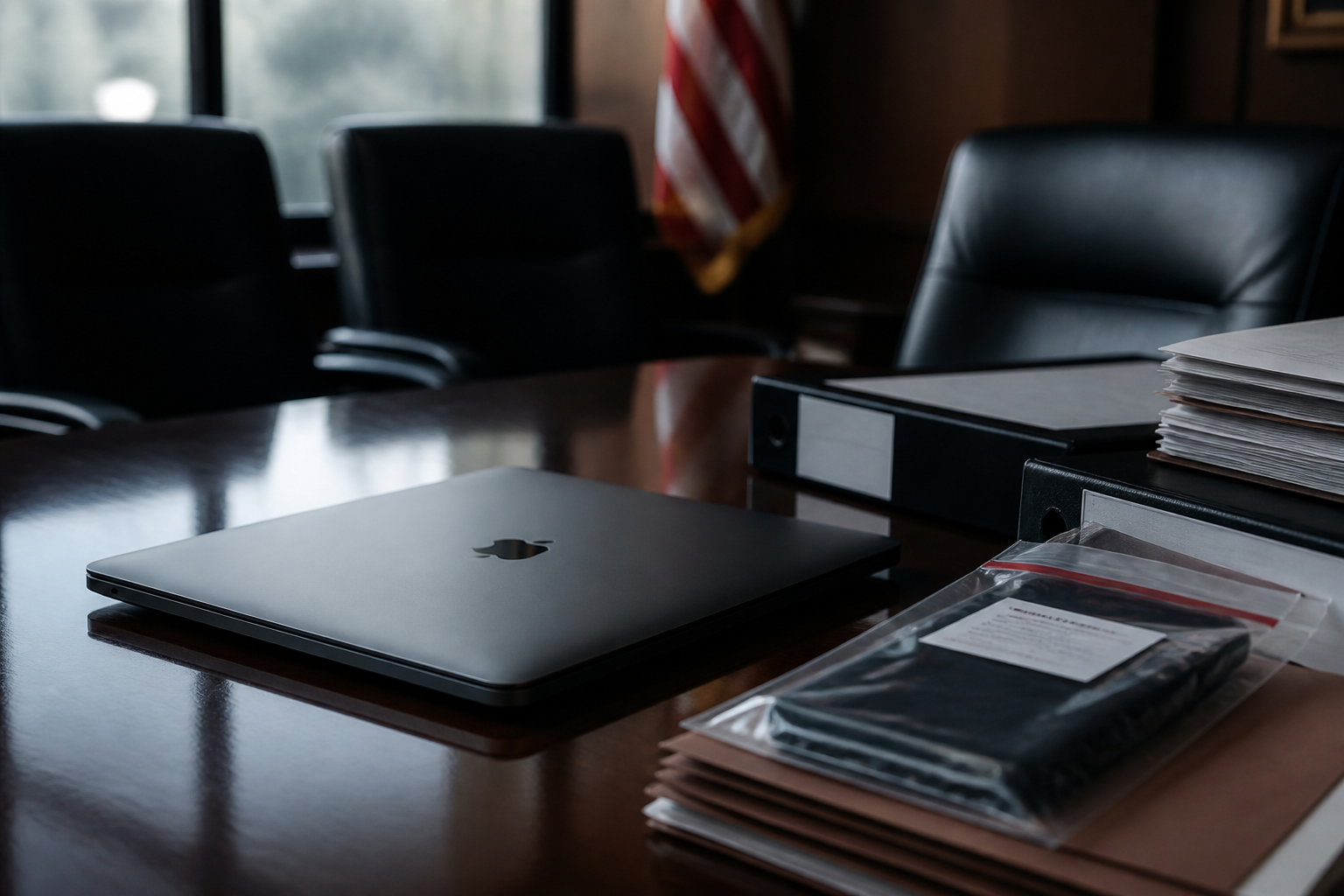
Apple on 31 August 2026 told a court it now has shocking new evidence in its trade-secrets lawsuit against OpenAI, after lawyers for former Apple engineer Chang Liu, who now works at OpenAI, turned over his old Apple work laptop. TechCrunch’s Amanda Silberling reported that Apple alleges Liu used a confidential Apple circuit schematic at OpenAI, ran a tool that shares a name with an internal Apple engineering application, and asked OpenAI colleague Yu-Ting Peng to help destroy evidence in June when he learned Apple was investigating. Apple wants a preliminary injunction blocking OpenAI hardware work based on Apple technology, and it notes that more than 400 former Apple employees now work at OpenAI.
What Apple says the returned laptop now shows
The laptop is not a full discovery dump. Apple’s filing, as quoted by TechCrunch, calls it the very limited information defendants provided so far, and only after weeks of delay. Apple says that limited slice is enough to show it is not on a fishing expedition and that its trade secrets are being used while evidence is being destroyed. The new details are redacted from public view. Readers should treat them as allegations in a live case, not as findings of fact. What is public is Apple’s characterizations: a confidential circuit schematic allegedly used in OpenAI work, a tool whose name overlaps an internal Apple engineering app, and an alleged request to Peng in June to help destroy evidence.
Past filings already included text messages from Liu, punctuated with crying-laughing emojis, that Apple says show he knew he still had access to Apple files after he left. The company now adds a sharper access theory. Apple claims Liu kept residual access because he exploited a rare, previously unknown authentication bug, not because a routine offboarding failure left a door open. That distinction matters for the injunction fight: a bug-exploit story is harder for OpenAI to file under ordinary contractor hygiene.
Silberling asked OpenAI for comment on the newest allegations and had not reported a fresh reply in the 31 August piece. PromptCrates coverage of OpenAI retiring the official DALL-E GPT is a reminder that OpenAI’s public product news and its private litigation docket now run on the same calendar. One is a chatbot feature sunset. The other is a hardware-trade-secrets fight that could constrain what OpenAI’s device teams may build while the case proceeds.
How OpenAI previously explained residual Apple access
OpenAI’s earlier defense, set out in a company blog post this month, was narrower than Apple’s new laptop narrative. The lab said Liu accessed Apple files after he stopped working there in order to help former colleagues who asked for assistance. It argued Apple was trying to shift blame onto residual access while failing to disclose that leftover access is a common Apple offboarding problem caused by weak system-access management when people leave. That is a process critique aimed at Apple IT, not a confession that a schematic traveled into OpenAI hardware work.
Apple’s August 31 filing tries to close that off-ramp. If a rare authentication bug was exploited, residual access is no longer a story about a forgotten permission bit. If a named OpenAI colleague was allegedly enlisted to destroy evidence once an investigation started in June, the file looks less like a messy alumni Slack thread and more like a spoliation claim. None of those points has been proven in a trial. They are why Apple is asking a judge for speed: a preliminary injunction plus expedited discovery, on the theory that more former employees may also be implicated.
Why Apple wants a hardware work injunction
A preliminary injunction is a court order that would freeze part of OpenAI’s hardware work while the lawsuit continues. Apple wants that freeze tied to technology it says is Apple’s, plus a faster evidence schedule because it fears more people and more devices are in play. The 400-plus former Apple employees now at OpenAI is the scale number in the original complaint, and it is why this is industry news rather than a single-employee HR dispute. Talent density at that level turns every laptop return into a proxy war over who owns the next device stack.
Hardware is the sensitive surface. Software model releases can be argued in public blogs. Circuit schematics and internal engineering tools cannot. If a judge accepts Apple’s laptop narrative even in part, OpenAI’s device roadmap could face a court-shaped delay at the same moment labs are racing on agents and interfaces. Related PromptCrates reporting on Anthropic’s Claude Code weekly limits from 14 September shows how lab competition is usually priced in tokens and seats. This case prices it in injunction risk.
Buyers and reporters should keep the parties' lines separate. Apple: shocking laptop evidence, schematic use, a same-named tool, alleged destruction help from Peng, a rare auth bug, an injunction, expedited discovery, more than 400 alumni. OpenAI, previously: residual access to help colleagues, and Apple’s own access-management failures. TechCrunch is the primary chronicle of the 31 August filing. File the story as industry-news on an unresolved trade-secrets suit, not as a verdict.
How the Apple OpenAI talent pipeline collides
Silicon Valley has watched Apple talent walk to OpenAI for years. The new filing turns that pipeline into an evidentiary problem. If hundreds of people moved, Apple will argue that one returned laptop is a sample, not the universe, which is why it wants expedited discovery. OpenAI will argue that Apple is converting ordinary alumni help and messy offboarding into a hardware lockdown. Judges, not blogs, will sort those theories. Until then, every Apple-to-OpenAI hire sits next to a litigation footnote.
The practical takeaway for other labs is documentation. Offboarding logs, schematic access, and engineering-tool licenses will be exhibit A in the next similar fight. Apple chose to use the word shocking in public-facing coverage of a redacted filing; that word is advocacy. The facts that can be stated without a courtroom are narrower: on 31 August 2026 Apple filed new laptop-based allegations against Chang Liu and OpenAI, named Yu-Ting Peng in an evidence-destruction claim, sought a hardware injunction, and pointed to more than 400 former Apple employees now at OpenAI. TechCrunch’s report is the source for those claims.
Sources
- Apple shares shocking evidence against former employee accused of stealing company data for OpenAI — TechCrunch (Amanda Silberling), 31 August 2026