SpaceX Turbine Foundry Speeds AI Power — With Pollution Risks
On 29 August 2026 Elon Musk confirmed SpaceX’s Bastrop foundry casts turbine blades and vanes, aiming to accelerate natural-gas turbines for AI power by up to 18 months.
PromptCrates Editorial
Staff Writer
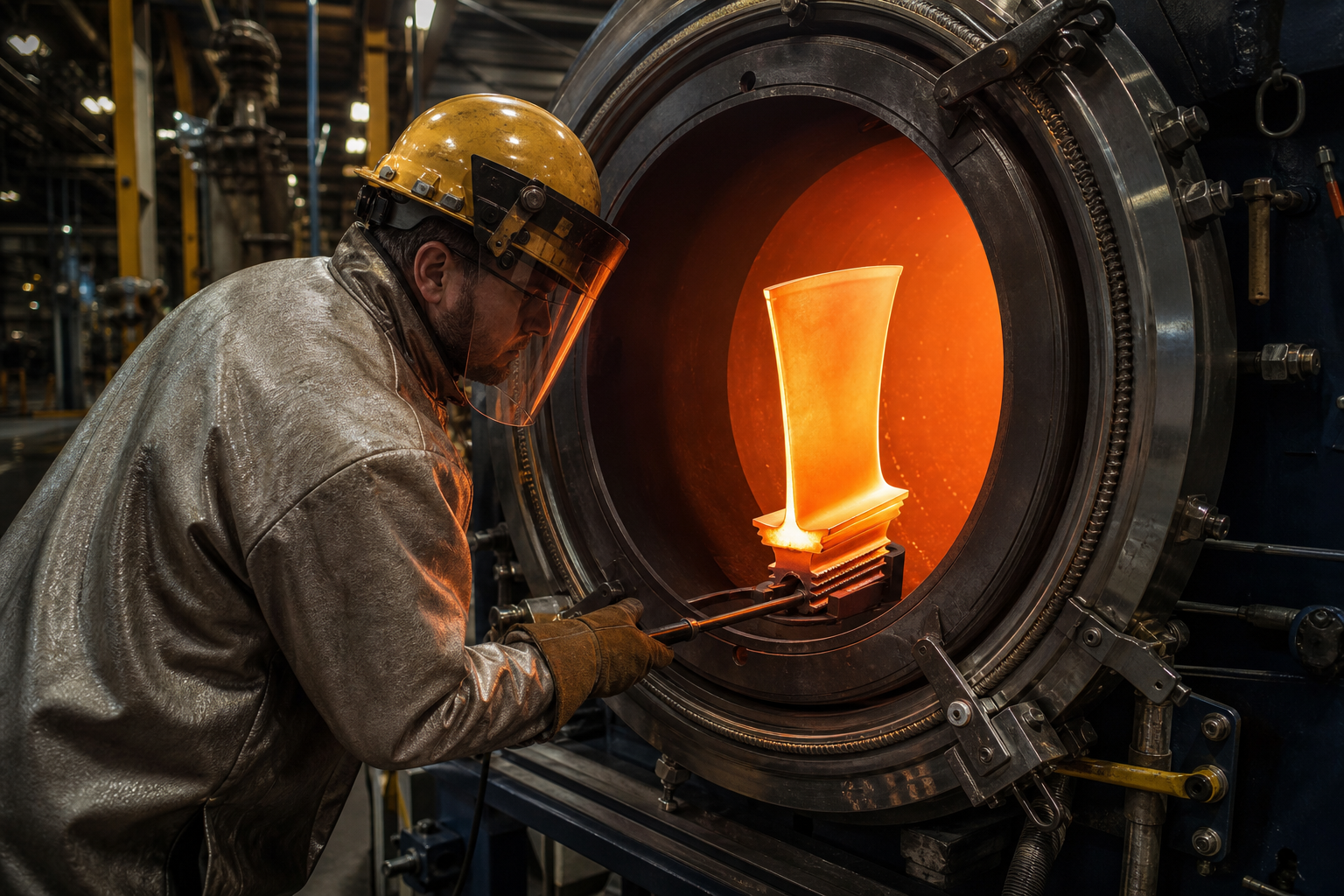
Elon Musk confirmed on Saturday, 29 August 2026, that a previously secret SpaceX foundry in Bastrop, Texas, is casting turbine blades and vanes — the bottleneck part of natural-gas turbines that AI data centers increasingly need. TechCrunch’s Connie Loizos reported the confirmation on 30 August 2026, after The Information earlier that day cited job listings for a “blades and vanes foundry.” Corey Trinetti reported SpaceX bought roughly 830 acres near its Starlink factory in Bastrop between March and June. Musk said in-house casting can accelerate natural-gas turbines coming online by up to 18 months.
Why is a SpaceX turbine foundry a game-changer for AI power?
Musk wrote on X that SpaceX and Tesla are each building 100 GW per year of solar production capacity as fast as possible, but natural gas will still be needed to supplement and bootstrap solar for several years. He called casting blades and vanes the limiting factor for nat-gas turbine production. By doing that casting inside SpaceX, he argued, turbines can arrive up to 18 months sooner — language he labeled a profound game-changer. The claim matters because hyperscalers including Amazon, Google, Meta, OpenAI, and Microsoft are already building private gas-fired plants next to data centers.
Demand signals reinforce the bottleneck story. The International Energy Agency projects global data-center electricity use roughly doubles by 2030. GE Vernova has essentially sold out of production capacity through 2030, driven largely by AI infrastructure demand. Nvidia Blackwell still carries multi-month lead times. PromptCrates coverage of <a href="https://www.promptcrates.com/news/nvidia-vera-rubin-orchestration-beyond-gpu">Nvidia’s Vera Rubin orchestration push beyond the GPU</a>, <a href="https://www.promptcrates.com/news/amazon-2-million-nvidia-gpus-aws-tripled-order">Amazon’s roughly 2 million Nvidia GPU order ramp</a>, and <a href="https://www.promptcrates.com/news/nvidia-96-billion-quarter-108-billion-guidance">Nvidia’s $96 billion quarter</a> shows compute CapEx still climbing even as power hardware becomes the scarce complementary good.
How hard is industrial-scale blade and vane casting?
Blades in the hottest turbine section run about 3,000 to 3,600°F — roughly 800°F hotter than the melting point of the alloy — which is possible only with internal cooling channels and thermal-barrier coatings. Each blade must be cast as a single unbroken crystal in a vacuum furnace. Only four companies worldwide have mastered industrial-scale casting of that kind, and all are tapped out. Power-plant blades are larger than jet-engine blades and harder to produce without defects. If SpaceX succeeds, a Musk-controlled entity would hold manufacturing capability that every other AI infrastructure builder currently depends on a tiny oligopoly for.
That concentration risk sits beside financing stress in the GPU cluster economy. Related PromptCrates reporting on <a href="https://www.promptcrates.com/news/lambda-1-billion-debt-nvidia-microsoft">Lambda’s $1 billion debt package tied to Nvidia and Microsoft</a> shows how capital markets are already stretching to fund AI compute. A foundry that shortens turbine lead times by up to 18 months would shift bargaining power toward whoever controls casting capacity, not only toward who can buy GPUs.
What are the North America pollution implications in Texas, Memphis, and Virginia?
Faster turbines are not only an industrial story. In Memphis, SpaceXAI Colossus data centers have drawn criticism since 2024. The NAACP accuses operators of running turbines without the permits and pollution controls required by federal law. The turbines emit smog-forming compounds and formaldehyde linked to asthma, respiratory disease, and certain cancers. University of Memphis researchers said air pollution grew “slightly worse,” while calling their own analysis limited, and the site sits near neighborhoods already burdened by heavy industrial pollution.
In Virginia’s Data Center Alley, a Piedmont Environmental Council study using the EPA COBRA model estimated that emissions from one facility’s eight full-time gas turbines could reach more than 2.5 million people, with 3.4 to 6.5 additional premature deaths a year and $53 million to $99 million in annual health-related damages, hitting already-marginalized communities hardest. Bastrop’s foundry build-out therefore lands in a North American pattern: Texas manufacturing for turbines, Tennessee community health disputes around Colossus, and Virginia modeling of cumulative gas-turbine harm. File the story as industry-news on AI power infrastructure, not as a finished environmental verdict.
What should AI infrastructure buyers watch next?
Procurement teams financing GPU clusters should add turbine lead times to the same risk register as Blackwell multi-month waits. If only four industrial casters can make power-plant blades as single crystals, and all are sold out, then SpaceX’s Bastrop foundry is not a curiosity — it is a potential fifth supply node controlled by the same ecosystem that already shapes Starlink manufacturing and Tesla energy plans. Musk’s 100 GW per year solar targets for SpaceX and Tesla each do not erase his own admission that natural gas must supplement and bootstrap solar for several years. An 18-month acceleration claim, if realized, would rearrange who can energize AI campuses first.
Community groups in Memphis and modelers in Virginia already treat gas turbines beside data centers as a public-health file, not only an engineering file. NAACP allegations about permits and pollution controls, University of Memphis findings that air quality grew slightly worse under a limited analysis, and Piedmont Environmental Council COBRA estimates of millions of people in the emissions plume are part of the same TechCrunch narrative as the foundry reveal. Buyers who celebrate shorter turbine queues without reading local opposition are missing half the story Connie Loizos reported on 30 August 2026.
Sources
- <a href="https://techcrunch.com/2026/08/30/musks-faster-path-to-more-gas-turbines-comes-with-pollution-problem/">Musk’s faster path to more gas turbines comes with a pollution problem</a> — TechCrunch (Connie Loizos), 30 August 2026