AI ECG Flags Heart Failure in Under Two Seconds
On 31 August 2026 Imperial and BHF researchers told ESC Congress in Munich that AI can flag heart failure and valve disease from a routine ECG in under two seconds.
PromptCrates Editorial
Staff Writer
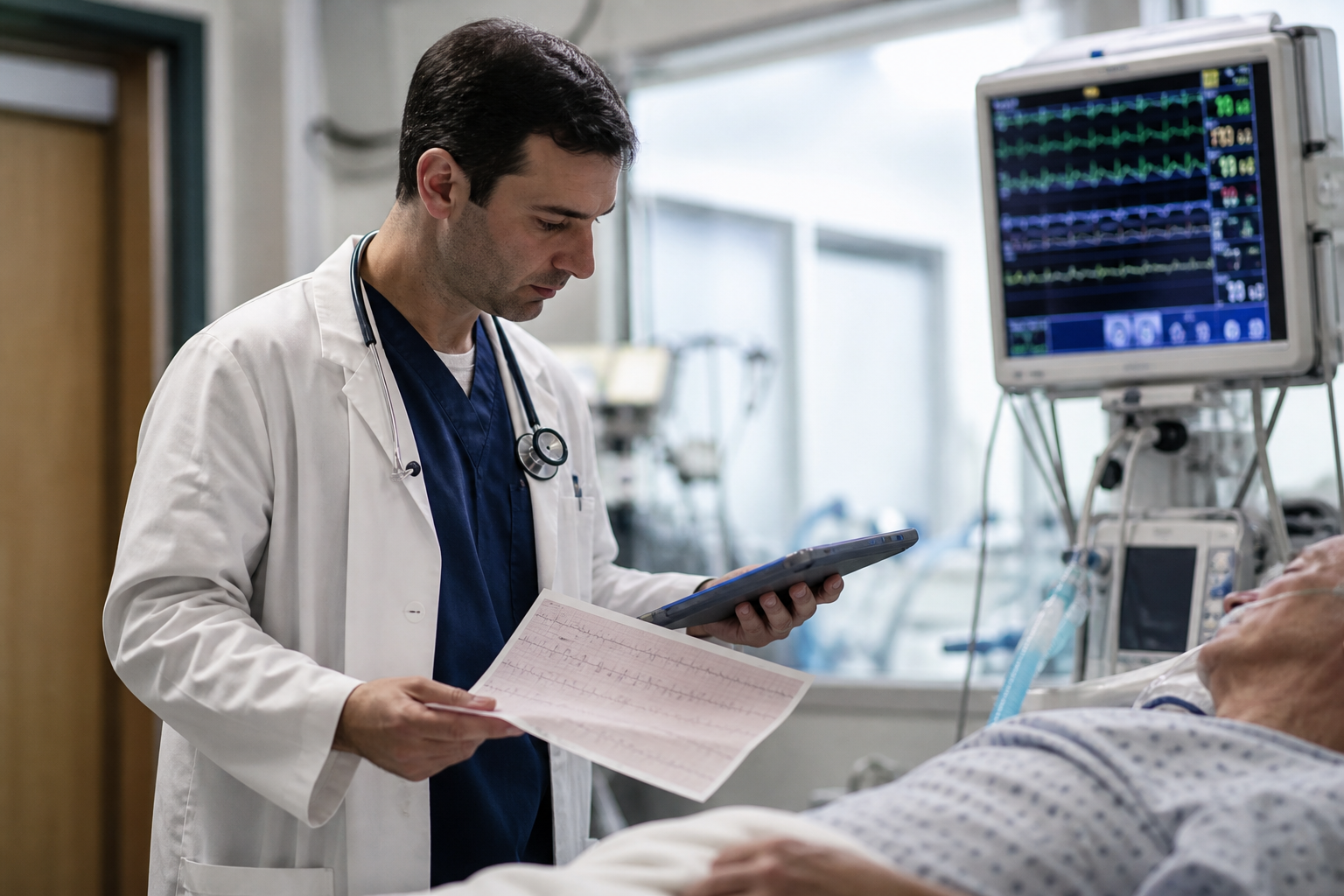
A British Heart Foundation-funded team at Imperial College London told the European Society of Cardiology congress in Munich on 31 August 2026 that an AI model can flag heart failure and heart valve disease from a routine electrocardiogram in under two seconds. In a trial of 67,000 patients in the United States, the tool identified up to 81 percent of people with heart failure and up to 90 percent of people with valve disease. Researchers stressed it is a triage signal for an echocardiogram, not a stand-alone diagnosis, against a worldwide volume of about one billion ECGs a year.
How the AI ECG tool performed in trials
A standard ECG records electrical activity, rate, and rhythm. It has helped catch heart attacks and abnormal rhythms for a century, and it does not, on its own, diagnose heart failure or valve disease. Those conditions usually need an echocardiogram, an ultrasound that patients can wait months to receive. The Imperial analysis, led by British Heart Foundation clinical research fellow Dr Ahmed El-Medany, trains a model on millions of patients so it can pull patterns from a routine ECG that a human reader typically cannot see in time to change a queue.
The US trial figure is the performance number for this news cycle: up to 81 percent identification of heart failure and up to 90 percent of valve disease among 67,000 patients. El-Medany called the system a superhuman AI in remarks reported by The Guardian. That label is a researcher’s claim about speed and hidden signal, not a regulatory clearance. The model still misses people. Dr Sonya Babu-Narayan, a consultant cardiologist and BHF clinical director, said technology like this will not detect everyone with a heart condition, but it could fast-track patients most likely to have an abnormality.
Early diagnosis matters because medicines for heart failure and valve disease work better before people become dangerously unwell. The conference setting is the world’s largest heart meeting, which is why a two-second read-out landed as health-science news rather than a quiet lab preprint. PromptCrates has covered other public-system AI fights, including Texas Governor Greg Abbott’s freeze on Flock AI camera funding; this file is the opposite posture, a clinical team asking hospitals to run a model on tests they already perform.
Why doctors still need an echocardiogram next
The researchers were explicit that the tool cannot be used alone to diagnose or rule out heart failure or valve disease. It gives a strong indication that someone may have them. A person judged highly likely could be sent rapidly for an echocardiogram instead of sitting on a standard waiting list for months. Prof Fu Siong Ng, a professor of cardiology at Imperial College London, said patients can wait several months for a heart ultrasound after a doctor refers them, which is why a prioritization layer is the product, not a replacement scan.
That framing should keep hospital lawyers and device regulators from over-reading the Munich slides. A two-second flag that routes the right patient to echo is a workflow claim. A two-second flag treated as a diagnosis is a safety failure. Babu-Narayan’s line that earlier diagnosis and treatment saves and improves lives is the clinical justification for triage, not a license to skip ultrasound. Any health system that pilots the model should keep echo as the confirmatory test and should audit false negatives, because the BHF itself said the tool will not catch everyone.
What Imperial and BHF researchers plan next
Ng also described a second use: opportunistic screening. The model could run on every ECG done in a hospital, including tests ordered for unrelated reasons, and flag people at highest risk of heart failure or valve disease so they can be diagnosed earlier. That is a population-health idea riding on a test already performed about a billion times a year worldwide. It is also how a research model becomes an infrastructure question: who reads the flags, who owns the false alarms, and how echo capacity grows if the queue is no longer first-come.
El-Medany said the next engineering challenge is handheld AI-led ECG readers for clinicians to use. That would move the same two-second idea out of a hospital cart and toward a device a professional can carry. Munich delegates also heard a secondary AI thread from the University of Tokyo and the Institute of Science Tokyo on five-second facial videos that may detect undiagnosed high blood pressure and type 2 diabetes. That work is not this trial. It is context that ESC 2026 is full of screening models, and it should not be blended into the Imperial ECG accuracy numbers.
Related PromptCrates coverage of SpaceX’s Bastrop turbine foundry and AI power pollution stakes is a reminder that AI news this week also includes industrial health externalities. The ECG story is the other direction: using models to find disease earlier inside medicine, with BHF funding and named Imperial investigators, rather than arguing about emissions beside a data center.
How opportunistic screening could cut waiting lists
If a hospital ran the model on every ECG, the scarce resource would still be echocardiography slots, cardiologists, and medicines, not inference. The promise is ordering: high-risk flags jump the queue, low-risk traces wait, and some patients who never would have been referred get seen because an unrelated ECG quietly revealed a pattern. The risk is a flood of flags that recreates the wait under a new name. Ng’s own caution about months-long ultrasound delays is why any pilot needs a measured echo pathway, not a dashboard of unacted alerts.
File this as health-science news dated 31 August 2026 at ESC Congress in Munich. Remember the numbers: under two seconds, 67,000 US patients, up to 81 percent heart failure, up to 90 percent valve disease, about one billion ECGs a year, BHF funded, Ng and Babu-Narayan on the record, El-Medany leading the analysis, echo still required. It is a triage research result, not a consumer wearable claim and not a how-to for running the model.
Sources
- Superhuman AI tool spots heart disease in less than 2 seconds — The Guardian, 31 August 2026