Runway Dev MCP Lets Coding Agents Drive Media APIs
Runway launched Runway Dev MCP on 2 September 2026, a hosted Model Context Protocol server at https://dev.runwayml.com/mcp that lets coding agents in Claude, ChatGPT, Codex, and Cursor
PromptCrates Editorial
Staff Writer

Runway launched Runway Dev MCP on 2 September 2026, a hosted Model Context Protocol server at https://dev.runwayml.com/mcp that lets coding agents in Claude, ChatGPT, Codex, and Cursor research models, configure routers and Characters, and debug failed generations without leaving the IDE. The release targets engineers, product managers, and solo founders who already drive integrations through agents and want SOC 2 Type II controls plus IP indemnification on the media API side.
What the hosted MCP actually unlocks
Before an agent writes its first API call, Runway Dev MCP can inventory which models a project may use, including prices, capabilities, and accepted inputs. It then pulls the exact request schema for the chosen model so the first call is structurally correct instead of a guess-and-retry loop that burns tokens. That research-then-call pattern is the practical payoff of MCP for creative APIs: the same assistant that scaffolds code can interrogate live platform metadata.
Agents can also create and configure a Model Router that optimizes for cost, latency, or quality across several eligible models, suggest per-generation cost limits, and later look up which model the router selected for a given call. Ranking draws on Runway’s own quality, price, and speed data rather than leaving developers to maintain brittle if-else tables. Characters follow a similar lifecycle: create, list, inspect, and attach or detach knowledge documents that steer identity-consistent generations.
Failure handling is where agent loops usually collapse into human Slack threads. With MCP, an agent can look up a failed task through a defined tool and read a specific reason — moderation rejection, asset size limit, malformed body — then patch the request and rerun. Runway pitches that loop as happening before a human notices the failure. For teams shipping generative video or image features, that is less about novelty and more about reducing overnight pager noise.
Designed for agent-native creative stacks
Runway Dev positions itself as an API platform that mixes Runway’s own models with other frontier labs, then wraps evaluation, selection, prompting, and chaining into productized tooling. MCP is one pillar. Agent-consumable documentation is another, so assistants can load the API surface as context instead of scraping marketing pages. The Quickstart menu is the third: create a key and it opens Claude Code, Codex, or Cursor with a prefilled agent message that installs the SDK and makes the first call.
That design assumes the integration owner still sits with the agent — not that the agent becomes an unsupervised production operator. Enterprise packaging underscores the point: SOC 2 Type II, IP indemnification, built-in content moderation, claimed 99.9% uptime, vendor management for every model provider, negotiated no-training and data-retention terms, plus spend controls and per-model cost visibility. Dedicated account managers and technical-artist support round out the enterprise tier.
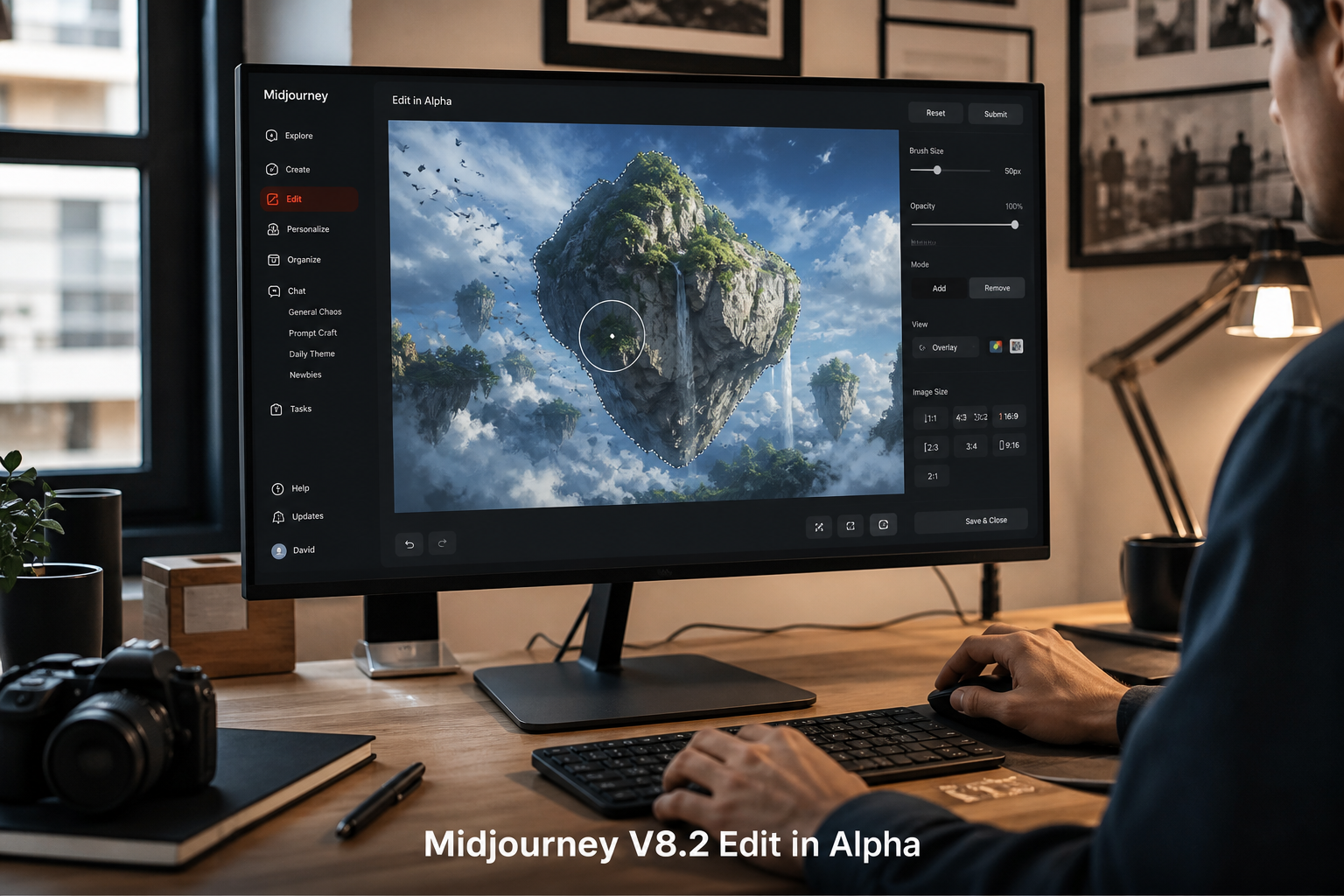
Creative teams comparing stacks will notice the overlap with other agent-reachable media tools. Midjourney’s editing surfaces and lightbox experiments, covered in our Midjourney v8.2 edit lightbox reporting, show how quickly generation UIs are becoming revision environments. Runway’s bet is that many production workflows will be orchestrated from coding agents rather than only from web canvases — especially when routers, Characters, and schema lookup need to stay in sync with application code.
Why MCP timing matters for media APIs
Model Context Protocol adoption is spreading across developer tools precisely because assistants need structured verbs, not pasted README chunks. Hosting MCP at a stable HTTPS endpoint means Claude, ChatGPT, Codex, and Cursor users add a connector once and approve access, instead of maintaining local stubs. For Runway, that distribution channel may matter as much as any single model release: if agents default to Runway Dev when scaffolding media features, marketplace gravity follows.
Token efficiency is an explicit claim. Agents that query schemas and task errors through tools waste fewer completion tokens on speculative payloads. In high-volume creative pipelines, that savings compounds beside GPU costs. It also reduces the “agent wrote a plausible but wrong field name” class of bugs that plague multimodal APIs with evolving request shapes.
Security and IP terms will decide enterprise uptake. Generative media buyers already ask who trains on their prompts, how long assets persist, and who indemnifies output claims. Runway’s checklist — SOC 2, indemnification, moderation, no-training negotiations — speaks to those procurement scripts. Whether agent-driven configuration introduces new permission risks is the open question: an over-scoped agent that can create Characters and routers becomes a powerful insider. Teams should bind MCP access to least-privilege keys and audit trails from day one.
Practical next steps for builders
Setup is intentionally short. In supported coding agents, add Runway Dev MCP as a custom connector pointing at https://dev.runwayml.com/mcp, approve the OAuth-style prompt, and let the Quickstart message drive the first integration. From there, a sensible pilot is one production path: agent proposes a Model Router with a hard cost ceiling, attaches a Character with two knowledge docs, and owns failure retries for a single endpoint. Measure schema-first success rate, mean time to recover from moderation rejects, and cost per accepted asset before widening scope.
Builders already experimenting with autonomous research loops — including overnight GitHub agents like those in our Karpathy AutoResearch coverage — will recognize the pattern: give the agent tools that map to real platform nouns, then constrain spend. Runway Dev MCP simply extends that pattern into generative media. If it works, tomorrow’s creative engineer may spend less time copy-pasting curl examples and more time reviewing agent-proposed routers that already know yesterday’s price sheet.