OpenAI Executive Exodus Leaves Greg Brockman Running Day-to-Day
A wave of OpenAI executive departures left president Greg Brockman running day-to-day product and scaling work while Sam Altman remained CEO amid IPO preparations.
PromptCrates Editorial
Staff Writer
Through late August 2026 OpenAI’s executive roster kept thinning — including Brad Lightcap, Denise Dresser, Fidji Simo, Kevin Weil, Bill Peebles, Kate Rouch, and infrastructure lead Chris Malone — while president and cofounder Greg Brockman expanded day-to-day control of product strategy, scaling, consumer and enterprise surfaces, and compute. Sam Altman remains CEO and public face. TechCrunch and The Verge framed the pattern as Brockman reasserting operational leadership as OpenAI prepares for a high-stakes IPO path after confidential SEC filings.
Which OpenAI executives left and what Brockman now oversees
The Verge’s Hayden Field reported April as an acceleration point: Peebles (Sora), Weil (science), and Srinivas Narayanan (B2B applications CTO) exited; CMO Kate Rouch and Fidji Simo (AGI deployment) cited medical reasons, with Simo stepping down in July after leave. Later exits included CRO Denise Dresser after about eight months and longtime COO Brad Lightcap. TechCrunch separately noted Chris Malone, head of data centers, left after joining in March 2025, following an infrastructure reorganization now led by vice president Sachin Katti.
When Simo went on leave, Brockman took product, including super-app efforts. A later revenue-focused reorganization gave him product strategy plus the scaling arm covering commercial operations. The Verge noted Brockman’s quote — not Altman’s — appeared in the Dresser departure materials, underscoring the operational shift. Thibault Sottiaux, who leads API and app offerings, told TechCrunch he likes to say everyone reports to Greg at the end of the day.
Keep incident files such as <a href="https://www.promptcrates.com/news/openai-hugging-face-incident-official-report">OpenAI’s Hugging Face incident official report</a> separate from this management story. One is safety post-mortem; the other is org chart and IPO readiness.
IPO pressure, Altman’s role, and why desks should not invent quotes
OpenAI confidentially filed going-public disclosures with the SEC in June, per TechCrunch; public listing timing has slipped in reporting toward 2027 expectations even as rivals like Anthropic also prepare debuts. Coverage contrasts Anthropic’s reported profitability narrative with OpenAI’s rising revenue alongside rising losses. Analysts quoted by The Verge — including PitchBook’s Harrison Rolfes and attorney Ross Carmel — described executive consolidation as a possible cost and decision-speed move before listing, while calling the clustered timing unusual.
Altman remains CEO. Brockman told CNBC’s Squawk Box that different eras bring different leaders, that he and Altman are constants, and that resilience comes from that continuity. Attribute carefully: do not invent exit reasons for Malone beyond the reorganization TechCrunch reported, and do not invent Altman quotes this rewrite does not have. Some earlier departures were health-related; others tracked Altman’s push to cut expensive side projects and focus on revenue.
For compute-side context without collapsing stories, see <a href="https://www.promptcrates.com/news/amazon-2-million-nvidia-gpus-aws-tripled-order">Amazon’s multi-million Nvidia GPU AWS order</a> as industry capacity color, not as an OpenAI HR explanation. Keep <a href="https://www.promptcrates.com/news/nvidia-96-billion-quarter-108-billion-guidance">Nvidia’s earnings guidance</a> as supplier macro, not OpenAI’s org chart.
What day-to-day Brockman control means in practice
Infrastructure and product teams report to Brockman. Rolfes argued Brockman’s product-scale commercial profile collapses decision layers and may prompt departures among leaders who disagree with his approach. Carmel noted cutting expensive senior salary layers can matter when a company wants a cleaner IPO narrative versus a profitable peer. Brockman’s history includes early infrastructure work, a reduced management role after Altman became CEO in 2019, and a solidarity resignation during the 2023 board crisis.
The Verge and TechCrunch both treat 2026 as a re-centralization around Altman-plus-Brockman rather than a title change for Brockman. Product desks watching ChatGPT consumer monetization should also keep <a href="https://www.promptcrates.com/news/openai-chatgpt-ads-india-free-go-tiers">ChatGPT ads India Free Go tiers</a> adjacent — monetization experiments sit under the same scaling pressure Brockman now owns.
How to log the late-August OpenAI leadership story
Primary sources are <a href="https://techcrunch.com/2026/08/26/how-do-we-explain-openais-executive-exodus/">TechCrunch’s 26 August exodus analysis</a> and <a href="https://www.theverge.com/ai-artificial-intelligence/982774/greg-brockman-openai-role-expansion">The Verge’s Brockman role expansion report</a>. Named exits to keep: Lightcap, Dresser, Simo, Weil, Peebles, Rouch, Malone; infrastructure now under Sachin Katti; Brockman on product and scaling; Altman still CEO.
Useful pin: by late August 2026 a wave of OpenAI executive exits left Greg Brockman running day-to-day product, scaling, and compute while Sam Altman remained CEO, with IPO preparations and an infrastructure reorg under Sachin Katti shaping the narrative — without inventing quotes beyond attributed reporting.
Geographic investors watching U.S. frontier-lab IPOs should treat Brockman’s expansion as an operations signal, not a guarantee of listing timing. Confidential SEC filings, reported loss trajectories, and peer profitability narratives all sit outside any single executive’s portfolio. Still, when product, scaling, and compute report through one president, public-market storytellers will ask whether OpenAI can ship consumer and enterprise revenue without the departed commercial specialists.
Do not invent a boardroom coup narrative. Reporting describes alignment between Altman and Brockman after the 2023 crisis, not a title fight. The accurate frame is consolidation under two constants while a long list of hired operators exits. That frame is enough for desks without speculative psychodrama.
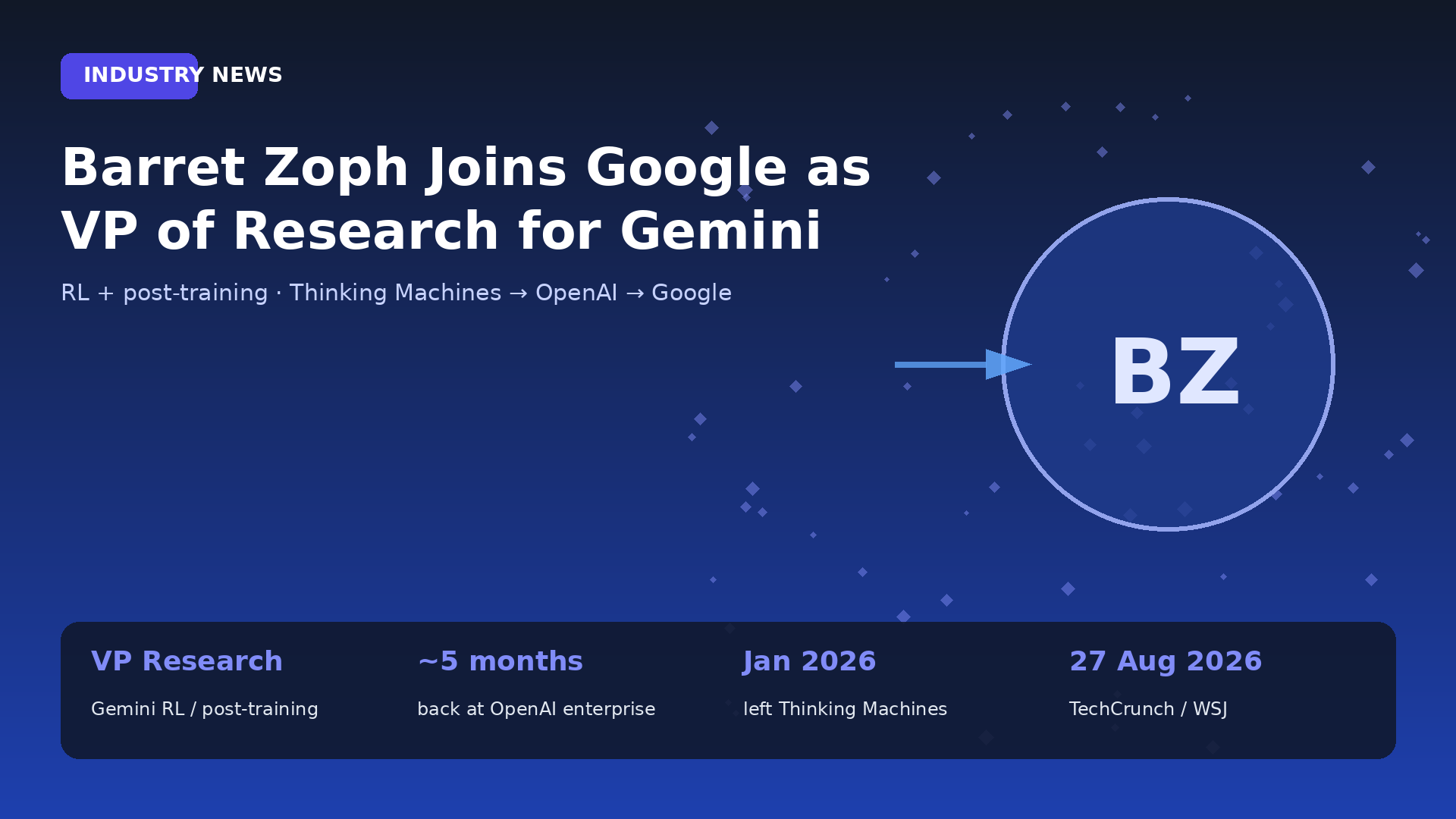
If your file already includes <a href="https://www.promptcrates.com/news/barret-zoph-joins-google-deepmind-gemini">Barret Zoph joining Google DeepMind</a>, keep rival lab hiring moves separate from OpenAI’s internal exits. Talent flows both ways in 2026; collapsing them muddies cause and effect.
Sources
- <a href="https://techcrunch.com/2026/08/26/how-do-we-explain-openais-executive-exodus/">How do we explain OpenAI’s executive exodus?</a> — TechCrunch, 26 August 2026
- <a href="https://www.theverge.com/ai-artificial-intelligence/982774/greg-brockman-openai-role-expansion">It’s Greg Brockman’s OpenAI now</a> — The Verge, 20 August 2026