
MIT Broad Lets Living Cells Report RNA Over Time
On 4 September 2026 MIT News highlighted a Broad Institute method that lets living cells package RNA into virus-like particles so scientists can sequence gene activity over time without killing the cells.
PromptCrates Editorial
Staff Writer
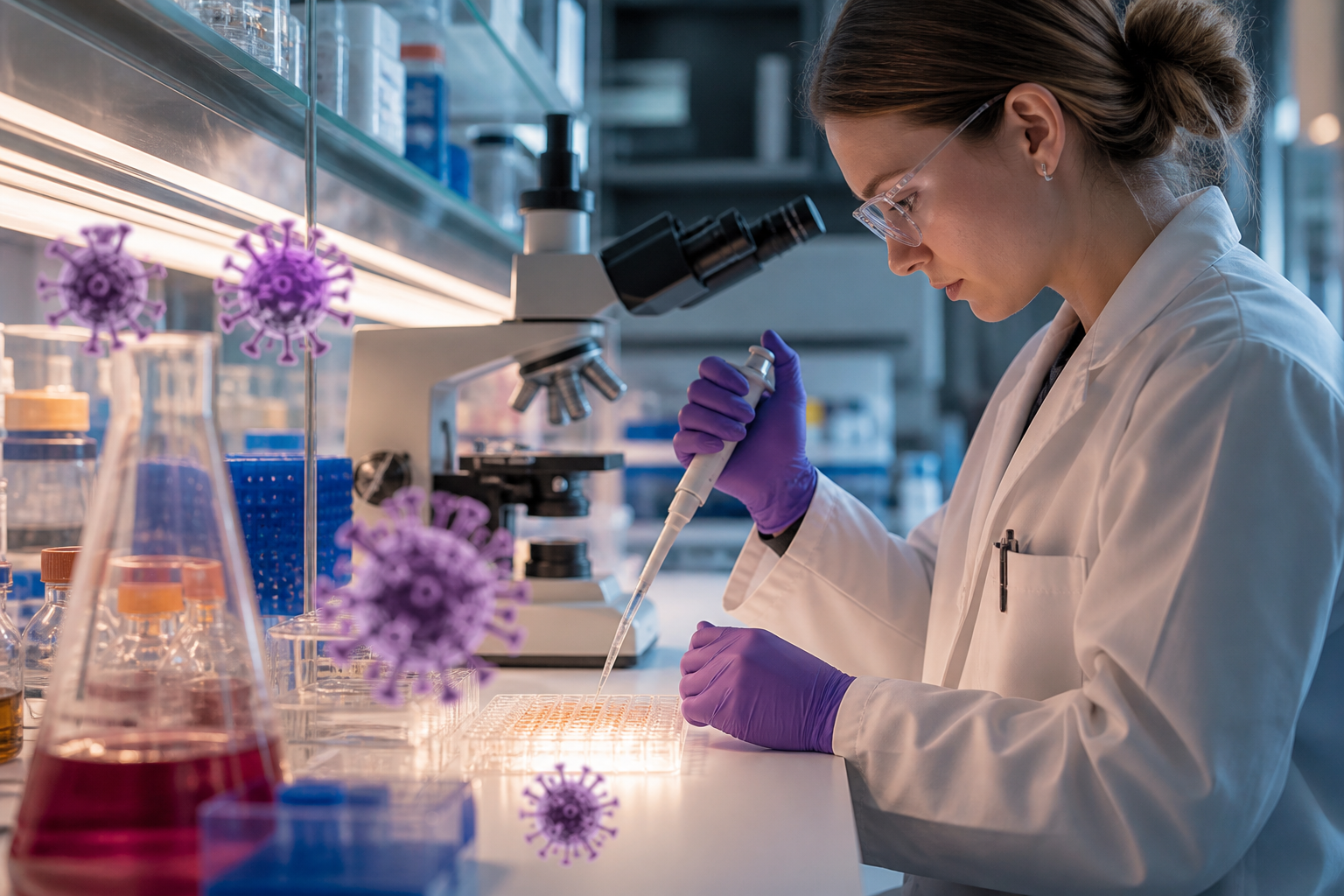
Researchers at the Broad Institute of MIT and Harvard and at MIT described a cellular self-reporting method that lets living cells export their own RNA for sequencing without being killed. MIT News covered the work on 4 September 2026, following a Broad press release on 1 September, and the paper appears in Cell. By engineering cells to package transcripts into virus-like particles that bud into culture medium, the team can sample the same population repeatedly as cells mature or respond to drugs — a shift from one-time snapshots that destroy the culture.
How living cells package and export RNA
Senior author Paul Blainey, a Broad core member and MIT biological engineering professor, framed the project as a decade-plus effort to replace mechanical biopsies of cells with a molecular method other labs can adopt. Co-first authors Jacob Borrajo, Mohamad Najia, and Anna Le led the build. The team took inspiration from retroviruses that evolved to wrap RNA genomes in protein shells. They engineered mammalian cells to express a retroviral structural protein that recruits cellular RNA, forms a shell, and buds particles into the surrounding liquid. Scientists then isolate RNA from medium samples and sequence the exported transcriptome.
That design choice is deliberate. Compared with robotic or mechanical sampling, a molecularly encoded exporter scales more easily across biomedical labs that lack specialized hardware. Blainey’s group emphasizes tools that other teams will actually use, and the self-reporting concept moved from science fiction to a workable protocol after years of high-risk development. Readers following AI-adjacent lab automation may also compare measurement bottlenecks discussed in FDA TEMPO pilot four companies, where regulatory pilots similarly depend on richer longitudinal readouts.
Where the method already works in models
Validation spanned immortalized human cells, cancer lines, stem cells and neurons derived from them, and primary cells from human donors. In mixed cultures of two human cell types, the researchers tagged particles so each lineage’s RNA signal could be separated during analysis. Three-dimensional systems matter too: endothelial spheroids yielded short-term transcriptional changes after biochemical stimulation without dismantling the structure researchers want to preserve.
A collaboration with MIT professor Linda Griffith applied the method inside organ-on-chip devices that mimic organ physiology and can reduce some preclinical animal testing. Retrieving cells from those chips is hard; self-reporting let the team monitor endothelial gene dynamics over time and showed that vascular-network-related genes differed depending on whether supporting fibroblasts came from uterus or lung tissue. That fibroblast-source dependence is exactly the kind of longitudinal contrast that a kill-and-sequence workflow would scramble by ending the culture.
- Paper in Cell; MIT News dated 4 September 2026 after Broad PR on 1 September
- Retroviral structural protein packages cellular RNA into budding VLPs
- Works across immortalized, cancer, stem, neuronal, and primary cells
- Dual-cell tagging separates mixed-culture signals
- Organ-on-chip tests with Linda Griffith showed fibroblast-source vascular gene differences
Why longitudinal RNA matters for disease work
Many disease and drug questions are about trajectories, not single time points. Cancer cells resist therapy over days; stem cells differentiate through intermediate states; neurons respond to cues that unfold slowly. Destroying a well to measure RNA forces researchers to start parallel wells and hope they stayed synchronized. Self-reporting keeps the same cells alive so the medium becomes a timeline of gene activity. Drug screens can ask whether a compound’s transcriptional signature fades, rebounds, or drifts into a new state after repeated dosing.
The Broad team is still hunting new applications and working toward single-cell feasibility. For now the method targets population-level dynamics that average labs can run. That positioning matters for translational groups that want time-resolved RNA without building custom biopsy robots. It also intersects open science norms: methods that travel as plasmids and protocols tend to spread faster than capital-heavy instruments, a theme echoed in open research tooling coverage such as OpenMythos GitHub Mythos reconstruction.
Limitations remain honest. Virus-like particle packaging may bias which transcripts export efficiently. Medium sampling still reflects a population average until single-cell versions mature. Organ-on-chip complexity means self-reporting helps but does not replace imaging or functional assays. Still, for labs stuck between medieval cell stabbing and full destruction protocols, a budding exporter that leaves cultures intact is a concrete upgrade. Expect follow-on papers to stress-test perturbation libraries, longer time courses, and tighter coupling to AI models that predict state transitions from sequential transcriptomes.
Clinicians and computational biologists should also note the collaboration pattern: a methods lab plus an organ-on-chip engineering group produced a readout neither could ship alone. That cross-lab template is how live-cell transcriptomics is likely to spread — not as a single boxed kit, but as shared plasmids, medium-sampling SOPs, and analysis notebooks that other institutes can fork. If single-cell versions arrive, expect demand for AI tools that align sequential transcriptomes across noisy particle batches without assuming synchronized death of parallel wells.
Sources
- New method allows scientists to follow gene activity over time in the same cells — MIT News, 4 September 2026