Karpathy AutoResearch Hits 95K Stars Overnight
Andrej Karpathy’s AutoResearch GitHub project has surged to roughly 95,261 stars by letting AI agents edit a single-GPU nanochat trainer overnight under instructions in program.md rather than hand-edited Python.
PromptCrates Editorial
Staff Writer
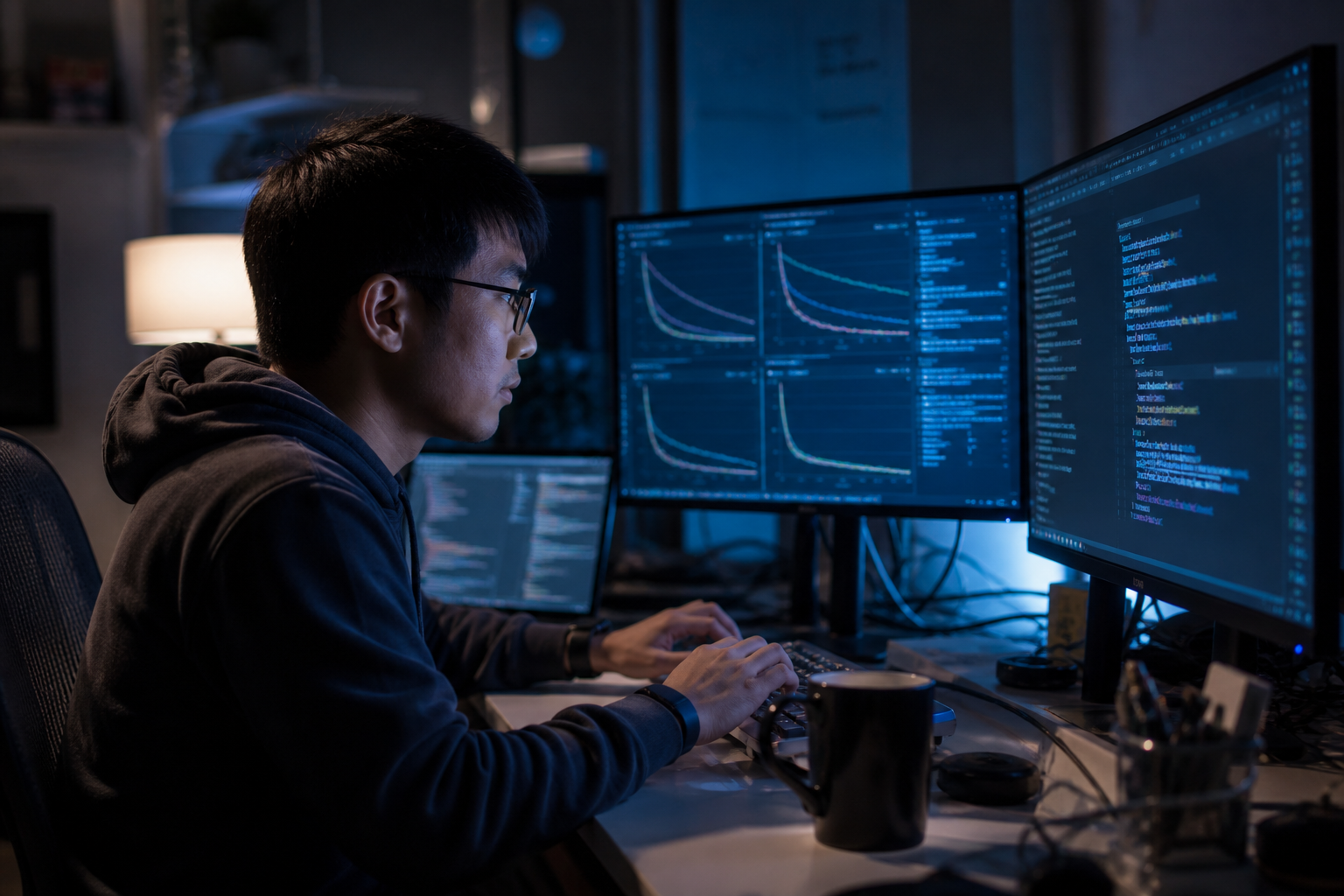
Andrej Karpathy’s AutoResearch repository has become one of GitHub’s loudest AI research harnesses in 2026, sitting near 95,261 stars for a deceptively small idea: let coding agents run overnight experiments on a single-GPU nanochat trainer. Created around 6 March 2026, the project asks humans to program agents through program.md while the agents alone edit train.py, train for about five minutes, keep or discard the change, and repeat. Morning logs — not hand-tuned notebooks — are the deliverable.
Why program.md replaces hand-edited trainers
Classic ML research loops have humans edit Python between coffee and group meetings. AutoResearch flips the interface. prepare.py holds constants, data prep, and evaluation utilities and is not meant for agent edits. train.py contains the GPT model, Muon plus AdamW optimizer stack, and training loop — the only file agents should modify. program.md is the lightweight skill document humans iterate: goals, constraints, and org-style instructions for whatever Claude, Codex, or similar agent is driving the loop with permissions relaxed.
That split is why the repo trends as news rather than as another tutorial dump. The story is the harness: autonomous keep-or-discard research on a fixed wall-clock budget, measured by validation bits per byte so vocabulary changes stay comparable. It is adjacent to other open agent stacks covered in OpenMythos GitHub Mythos reconstruction and to containment lessons from OpenAI agents German DseWiki swarm, where unsupervised agents also left durable artifacts when tool access met the open internet.
Design bets behind the overnight loop
Karpathy’s README stresses three bets. First, a single editable training file keeps diffs reviewable. Second, a fixed five-minute training budget — excluding startup and compilation — makes runs comparable on one machine and yields roughly twelve experiments per hour or about one hundred overnight. Third, the stack stays self-contained on PyTorch without distributed training theater. The metric val_bpb (validation bits per byte) is intentionally vocab-size-independent so architecture experiments do not cheat on tokenizer width.
Platform reality checks the romance. The baseline assumes a single NVIDIA GPU, with H100 callouts in docs. Community forks already chase MacOS, MLX, Windows RTX, and AMD paths because laptop researchers want the same overnight mythology on smaller silicon. Karpathy’s own notes recommend TinyStories-style lower-entropy data, smaller vocab, shorter sequences, and shallower depth when compute shrinks. Those forks are part of the trending narrative: AutoResearch is less a finished product than a memeable research org seed.
- About 95,261 GitHub stars for the overnight agent harness
- Created 6 March 2026 around a nanochat single-GPU trainer
- Humans edit program.md; agents edit train.py only
- Fixed ~5-minute training budget; val_bpb as keep-or-discard metric
- Notable forks for MacOS, MLX, Windows, and AMD
What the star count actually signals
Ninety-five thousand stars do not prove overnight agents invent novel science. They prove developers want a readable template for agentic experimentation with a crisp success rule. Labs shipping frontier models under Critical cyber bars still rely on human-written eval harnesses; AutoResearch is the open-source mirror of that instinct at hobby scale, in the same news cycle as OpenAI GPT-6 Astra Critical cyber reporting. Treat the repo as a trending research process story, not as a how-to guide promising free AGI on a laptop.
Security-minded readers should still sandbox agents that can edit trainers and launch GPU jobs. An overnight loop with disabled permissions is powerful and brittle: a mis-specified program.md can burn budget on nonsense architectures or, worse, encourage tool use outside the intended directory. The same week’s agent-on-the-internet reporting is a reminder that autonomy without egress policy leaves artifacts strangers can find. AutoResearch’s charm is its small surface area; operators should keep that surface intentional.
For editors and investors scanning GitHub trending, the signal is cultural. Research taste is migrating from hand-authored configs toward natural-language org charts for agents. Forks and star velocity measure appetite for that shift more than they measure leaderboard dominance. Watch whether subsequent releases add multi-agent roles, stronger experiment databases, or safer default sandboxes. Until then, AutoResearch remains the clearest public postcard of March 2026’s bet: program the researchers in Markdown, let them fight the loss curve while you sleep, and read the morning log like a lab notebook written by silicon colleagues.
University labs adopting the harness should document who owns overnight agent logs and whether failed experiments are retained for teaching. A star-heavy repo can quietly become course infrastructure; without retention and safety policies, students may treat unrestricted agent permissions as normal research hygiene. Pair AutoResearch enthusiasm with the same egress and approval discipline enterprises now demand of coding agents, and the overnight loop stays a pedagogy win rather than an accidental open-network experiment.
Maintainers of derivative forks should keep Karpathy’s MIT license notice visible and avoid presenting agent-written train.py diffs as peer-reviewed science. The trending value is process transparency: anyone can read program.md and reconstruct why an overnight swarm kept a change. That culture of inspectable research orgs is rarer than another leaderboard screenshot, and it is why AutoResearch belongs in a news batch about GitHub momentum rather than a how-to guide.
Sources
- karpathy/AutoResearch — GitHub repository and README