Creative Commons Says Licenses Still Fit AI Era
On 3 September 2026 Creative Commons published updated guidance concluding that existing CC licenses and public-domain tools still apply in an AI ecosystem, while previewing CC Signals for AI-use expectations.
PromptCrates Editorial
Staff Writer
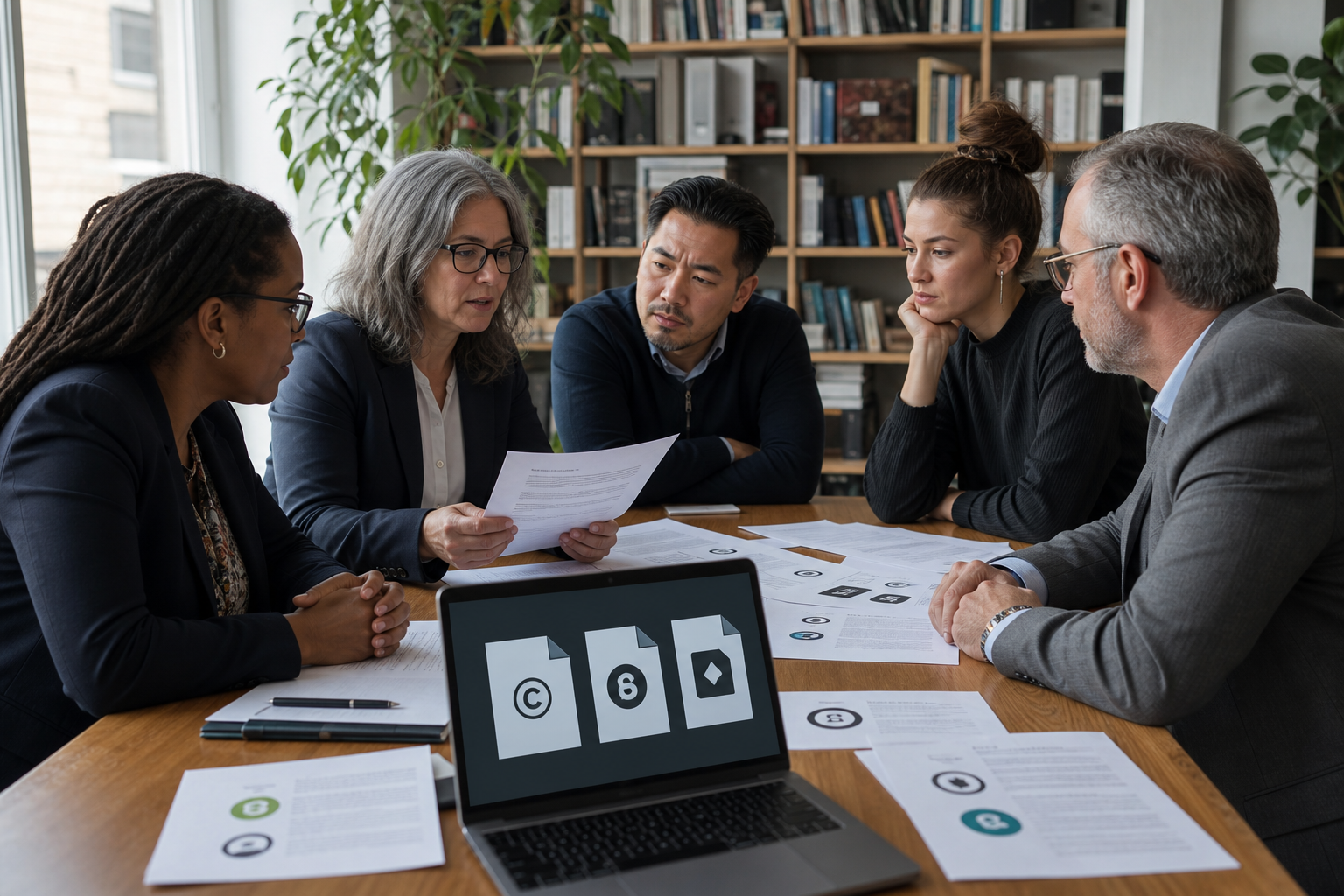
Creative Commons on 3 September 2026 published updated guidance on using CC licenses in an AI ecosystem and answered its own hard question: does advice written for human reuse still hold when machines train and remix at scale? The short answer, the organization said, is yes. The six CC licenses and two public-domain tools remain the supported toolkit, and CC still encourages sharing under the most flexible license or tool that fits the context, while acknowledging that some settings need extra restrictions.
Why existing Creative Commons tools still apply
Since 2002, CC licenses have been legally enforceable sharing instruments and cultural signals of open intent. The new document walks through how the organization stress-tested that stance for AI without rewriting the license suite. Prior guidance assumed people as the primary reusers; AI systems ingest and transform works differently. Even so, CC concluded that the same choice architecture — more rights reserved versus fewer — still helps licensors express intent, and that abandoning licenses for AI-only regimes would fracture the commons without solving attribution, agency, or consent gaps.
That continuity matters for universities, museums, and open-science publishers already standardized on CC BY or similar. Flipping to bespoke AI riders overnight would create dual stacks of contracts that courts and platforms may not parse evenly. CC’s message is pragmatic: keep using the tools that already travel across jurisdictions, then layer new expectation frameworks where copyright licenses cannot reach. Readers watching school-system AI staff rules can compare DC OSSE staff AI model policy for how education institutions set usage norms beside open licenses.
Where licensing hits its AI limits
CC is explicit that licensing alone cannot fix every AI sharing challenge. Content and data now move through systems far beyond copyright’s classic control points. The organization points to broader work on agency, attribution, and responsible reuse, including CC Signals — framed as a flexible, commons-friendly spectrum for communicating expectations about when and how work may be used in AI. Just as licenses offer graded rights reservations, Signals aims to offer graded AI-use preferences without pretending a single checkbox ends the debate.
For creators, the operational takeaway is dual-track. First, pick the CC tool that matches how open you want human and institutional reuse to be. Second, watch Signals and related practices for machine-use signaling that may sit beside, not replace, the license. Platforms and model providers still negotiate scraping and training terms outside CC’s four corners; the guidance does not claim to bind those deals. It does give librarians and counsel a clear sentence to quote when someone asks whether CC broke under generative AI.
- Guidance posted 3 September 2026 affirms prior CC advice still holds
- Six licenses plus two public-domain tools remain the supported set
- Most flexible applicable license still encouraged
- Licensing alone cannot solve all AI sharing challenges
- CC Signals previewed as a spectrum for AI-use expectations
October sessions and sector feedback
CC scheduled two virtual events on 14 October 2026 to walk sectors such as education, science, and culture through the guidance. Session A runs 9:30–10:30 am EDT with Sarah Hinchliff Pearson, Brigitte Vézina, and Shanna Hollich. Session B runs 4–5 pm EDT with Pearson, Monica Granados, and Hollich. Both promise a short presentation plus audience questions — a feedback loop CC says it wants while legal and technical contexts keep shifting.
Policy teams should treat the post as stabilization, not surrender. Affirming existing licenses reduces panic-driven relicensing churn while admitting that AI needs additional vocabularies of consent. Compare that posture with copyright fights around generative music and publicity rights covered in Jason Isbell Suno publicity lawsuit: courts and contracts still move case by case, and commons organizations are trying to keep open sharing viable rather than defaulting to total lockdown. Institutions drafting AI training policies can cite CC’s line that open sharing remains essential to public-interest knowledge work even when machines are in the loop.
Practical next steps for content owners are modest. Audit which CC licenses already cover your catalogs. Decide whether your AI concerns are about attribution, commercial training, or downstream synthetic media, then map those concerns to either a license choice or a future Signals preference. Join the October sessions if your sector’s edge cases — clinical datasets, indigenous collections, classroom worksheets — need to be heard before Signals hardens. And keep teaching colleagues that open is a spectrum, not a single switch flipped by the arrival of large models.
General counsel teams can also use the guidance as a teaching memo for product managers who equate open licenses with an unlimited AI training free-for-all. CC’s text separates human commons reuse from the harder problem of machine ingestion, which means a BY license still does useful work for Wikipedia-style collaboration even when a separate Signals preference later says no commercial model training. Keeping those layers distinct prevents overloading copyright tools with jobs they were never designed to finish in a generative era.
Sources
- Guidance on Using CC Licenses in an AI Ecosystem — Creative Commons, 3 September 2026